Hierarchy Studies • September 20, 2026 • 6 min read

Establishing Dominant Contours

Defining the outer boundary of complex graphics. A systematic breakdown of how primary exterior strokes lock silhouettes in place and create readable spatial order for intricate internal line systems.

Vector Hierarchy Outer Silhouette Boundary 3:1 Stroke Ratio
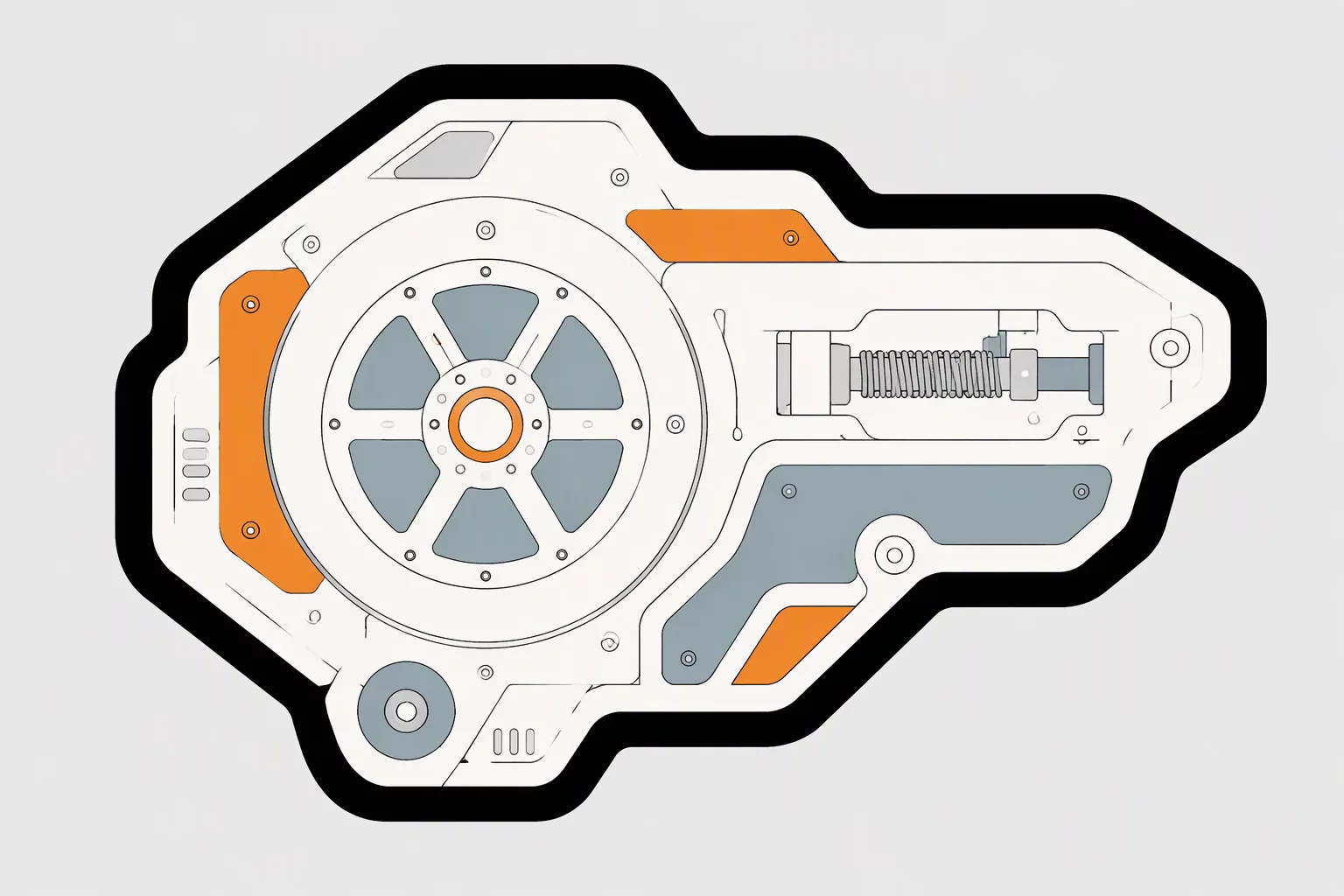
Vector illustration demonstrating dominant contour boundaries compared to thin internal structural strokes

The Role of Primary Framing in Vector Geometry

Complex vector graphics frequently suffer from visual fragmentation when every line claims identical importance. In multi-element badges, technical diagrams, and detailed illustrative emblems, individual paths compete against one another for visual dominance. Establishing a deliberate perimeter boundary grounds the entire composition. This heavy external stroke encapsulates the smaller interior components, ensuring the viewer identifies the primary shape silhouette in a fraction of a second.

Without an outer anchor, subtle details disperse across the background canvas. Designers often attempt to solve this readability breakdown by darkening colors or adding dropped drop shadows. However, structural integrity stems entirely from line weight relationships. When the perimeter line exhibits deliberate, uncompromising thickness, internal cutaways and inner filigree instantly settle into subordinate positions.

Design Principle

Analyze Your Outer Vector Perimeters

Examine how perimeter thickness anchors visual weight and prevents intricate interior pathways from bleeding together during viewing.

Submit Inquiry

Calibrating Thickness to Prevent Visual Bleed

The transition between internal detailing and boundary paths requires mathematical proportion rather than guesswork. Setting secondary strokes at 0.75 points while placing the primary bounding path at 2.5 or 3 points establishes an undeniable reading order. This disparity provides necessary breathing room, preventing delicate hatching and internal partition paths from merging into visual mud when viewed at offset distances.

An established dominant contour should command roughly three times the stroke weight of internal secondary details to preserve optical separation across screen environments.

Furthermore, managing join styles along this dominant edge is paramount. While interior line work might favor delicate miter joins or subtle round transitions, the dominant outline must maintain crisp, uninterrupted geometry. Corner radii should stay aligned with the broader graphic silhouette, ensuring that no sudden apex knots distract from the overall exterior framing.

Core Takeaways

Key Rules for Dominant Contours

  • Silhouette First: Construct the outermost boundary with uninterrupted weight to ground interior detail and stabilize complex shapes.
  • Consistent Weight Distribution: Maintain proportional thickness variations so internal lines never overpower the primary framing line.
  • Scale Survival: A dominant outer perimeter retains legibility and object recognition even when fine secondary strokes begin to recede.

Frequently Asked Inquiries